Group Photos for Dating Apps: Show Where You Fit In
Keep the people. Show your part in the scene.
A good group photo makes someone think, "That looks like a fun life to be part of." Keep the people, the occasion and your place in it. The useful question isn't whether you're alone in the frame. It's whether the picture makes spending time with you look appealing.
Look for involvement, not just a crowd
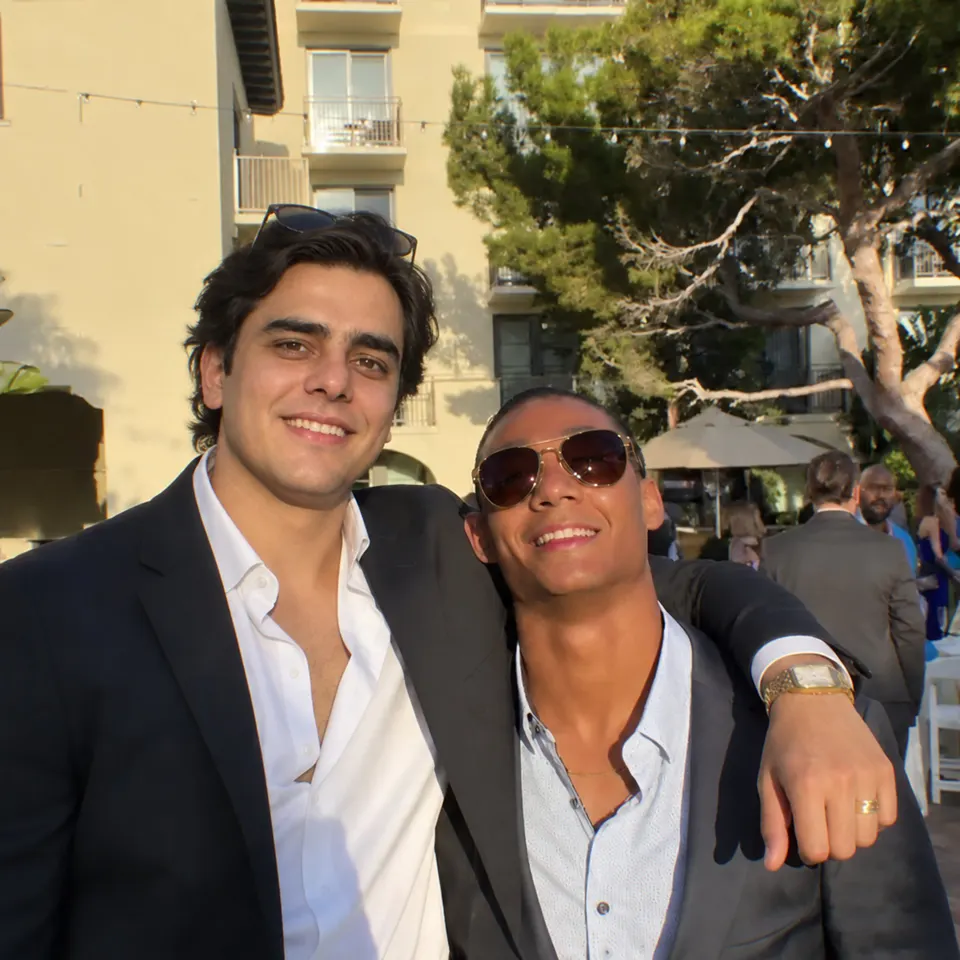
Being near people and looking like you belong with them are different things. In Zain's example, the arm around his friend does useful work: there's an interaction, not just two people standing in the same location.
That's the kind of detail to look for in your own camera roll. Are you laughing with someone, celebrating, playing a game or helping something happen? A smaller gathering with a visible connection can say more than a packed venue where you look detached.
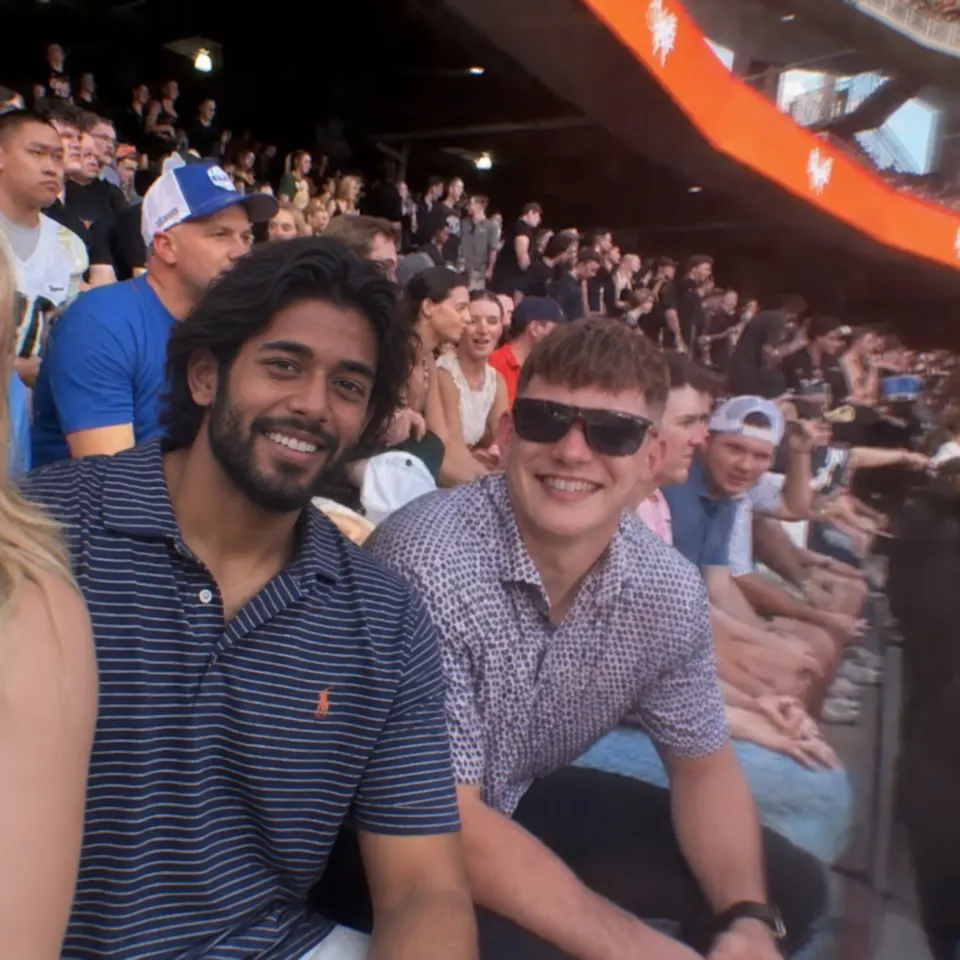
Rohan's stadium example makes the point without needing a dramatic pose. The seats, spectators and friend tell you what kind of afternoon is on offer. Cropping everything down to his face would remove the reason to choose this photo over another smiling picture.
Make your role easy to understand


You don't have to be the largest person in every photo. You do need a stranger to understand who to look at and why you're there. Chris's microphone gives him a role immediately. The microphone, notes and guests all help explain what the picture is showing.
Try the photo at the size it'll appear on a phone. Can someone who has only seen the rest of your profile pick you out? If they keep choosing your friend, try a different frame from the same moment. A modest crop can help when there's empty space at the edges. It can't create involvement that wasn't visible in the first place.
MJ's paintball photo is a useful case. The group and gear communicate a shared activity, but the wider view asks the viewer to recognize him among the players. It can add context after they've seen him elsewhere. Don't throw away the equipment just to turn it into another close-up.
Keep the details that explain the outing
Before cropping, name what makes the picture worth including. If it's "we go to games together," keep enough stadium to show that. If it's "I'm giving the toast," keep the microphone and some of the audience. If it's "this is what our weekends look like," the friends and activity may be the whole point.
Then remove only what's getting in the way. A large empty edge or an unrelated passerby might be expendable. The person you're laughing with probably isn't. Check the actual preview after uploading, because the frame you selected and the frame displayed may differ.
Sunglasses, hats and gear aren't automatic reasons to reject a group shot. Rohan's friend's sunglasses don't stop the stadium scene from making sense. Judge whether the whole picture is doing its job, then use the rest of the lineup to show other sides of you.
Don't confuse Popularity with Status
Popularity is the impression that people enjoy having you around. A warm interaction, a shared game or a lively party can support that. Status is about your standing or role: leading, achieving or being someone others look to. A crowd alone doesn't establish it.
Chris's toast example illustrates the distinction. The guests give the scene a social setting, while speaking to the gathering suggests a trusted role. That's a more specific impression than simply wearing a suit beside other guests.
Charm and Humor are separate, too. Looking warm and easy to spend time with can convey Charm. Humor needs something playful or funny; a smile by itself doesn't tell the whole story. You don't need to force all of these traits into one photo.
Choose the group photo that adds the most
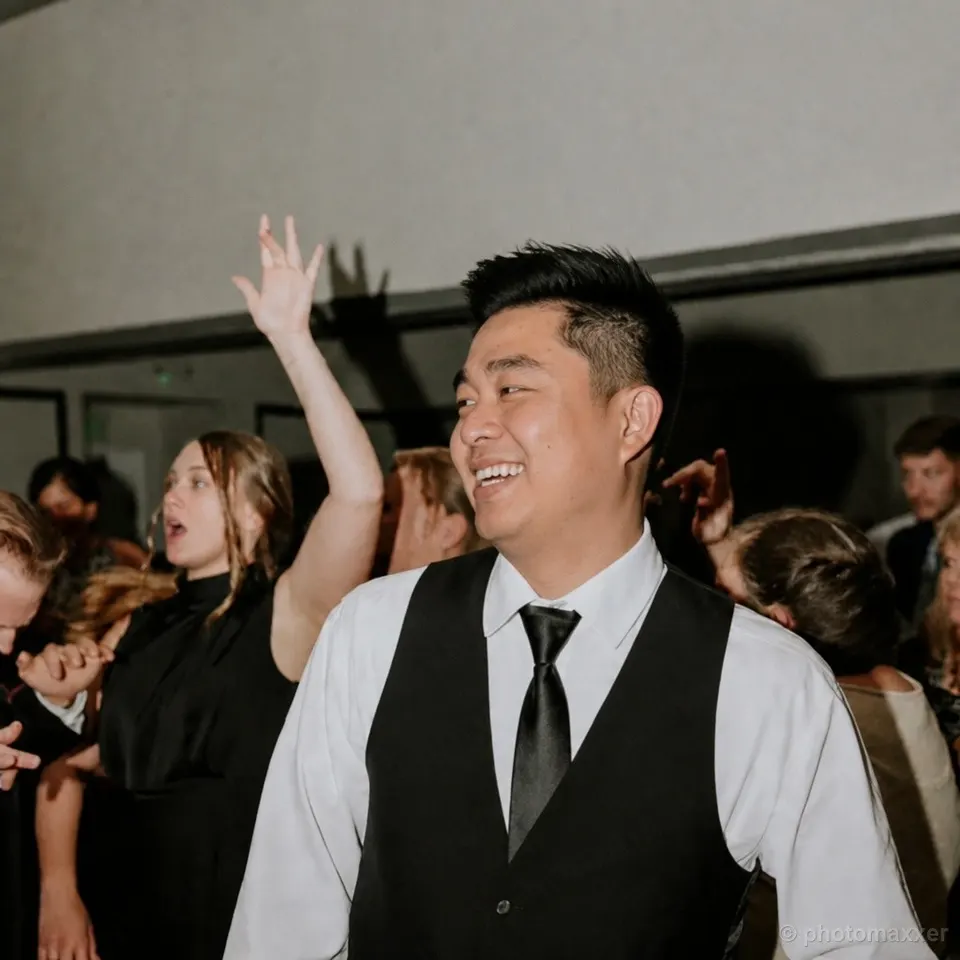
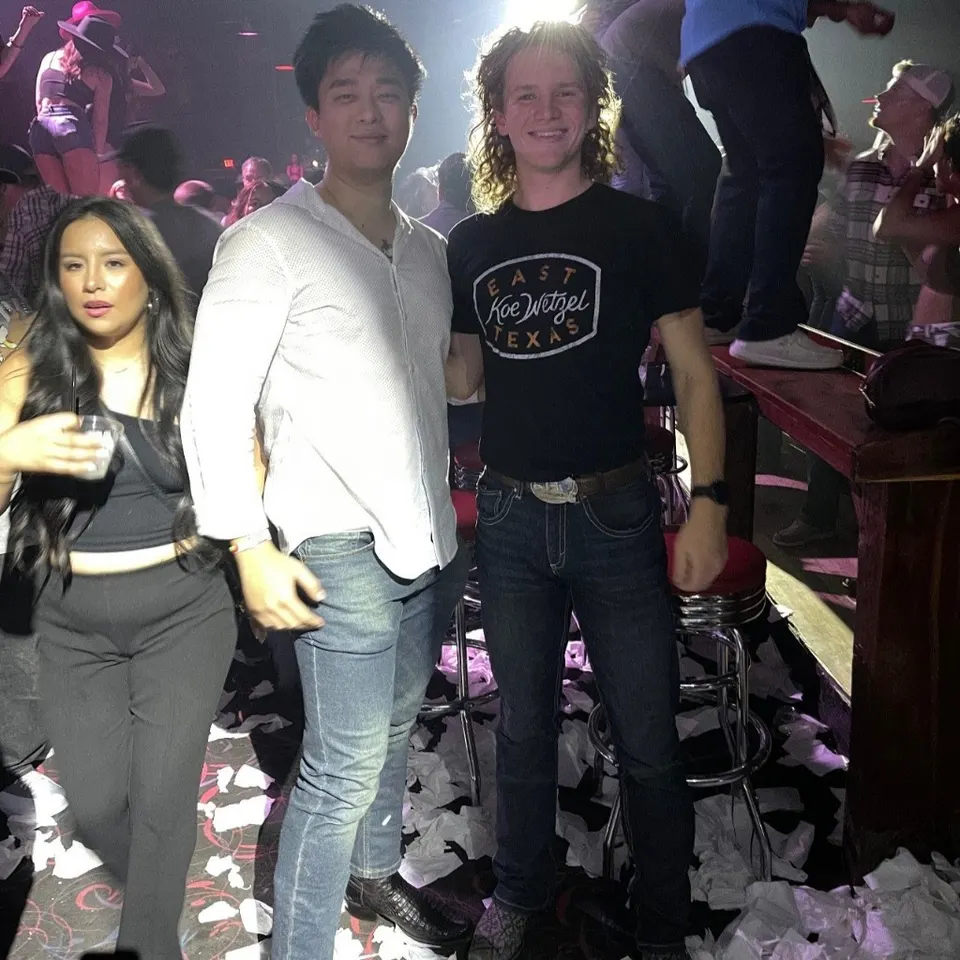
Look at Jason's two examples together. Both show a night out with people. The party shot gives us a lively expression and a sense of movement. The nightclub shot adds another setting, but it may repeat a social impression the first image already covers.
That doesn't make nightclub photos bad. It means you should compare each candidate with the photos you're actually using. If your lineup already shows the party, an activity or a warmer everyday moment may add more than another evening out.
Use the same test for your own pictures: "What would someone learn here that they haven't learned yet?" Keep the group shot with the strongest answer. There isn't a magic number of group photos that every profile needs.
Before you keep it, ask yourself:
- Do you look involved?
Look for a shared moment, not just a crowd.
- Can she pick you out?
Keep your role and the useful context clear.
- Does it add anything?
Compare it with the photos already in your lineup.
If it repeats a stronger photo, use that slot for a different side of you.
Can a group photo go first?
Yes, if it's your strongest introduction and your role is easy to read. A toast, a celebration or a shared adventure can make a more compelling first impression than an isolated portrait. Don't move a good social photo down the lineup just because other people are visible.
If the picture needs another photo to explain which person you are, use it later. That's a decision about that particular frame, not a rule that every profile must start with a solo headshot. Our first-photo guide explores choosing the impression you want to lead with.
Try this with your next outing
Ask a friend for a few pictures while you're involved in something you already enjoy. Keep the conversation, game or celebration going. When you review the results, choose for connection and context first, then check whether the expression and framing make the moment readable.
If friends are recognizable, check that they're comfortable appearing on your dating profile. Pick another frame if needed. You don't need to turn their faces into a row of distracting stickers to make the photo about you.
Photomaxxer evaluates photo impressions across Face, Height, Physique, Money, Ruggedness, Status, Popularity, Charm and Humor. Use that feedback to compare the job your group photo does with the rest of your lineup. The goal is an appealing picture of your life, not a crowd in every slot.