Dating Profile Photos Without Group Shots: What to Use Instead
Show interests, warmth and a life someone could join using the photos you have.
You can build a useful dating profile without a group photo. Start with pictures that show what you enjoy, how you interact and what spending time with you could feel like. A weak crowd shot doesn't earn a place just because other people are in it.
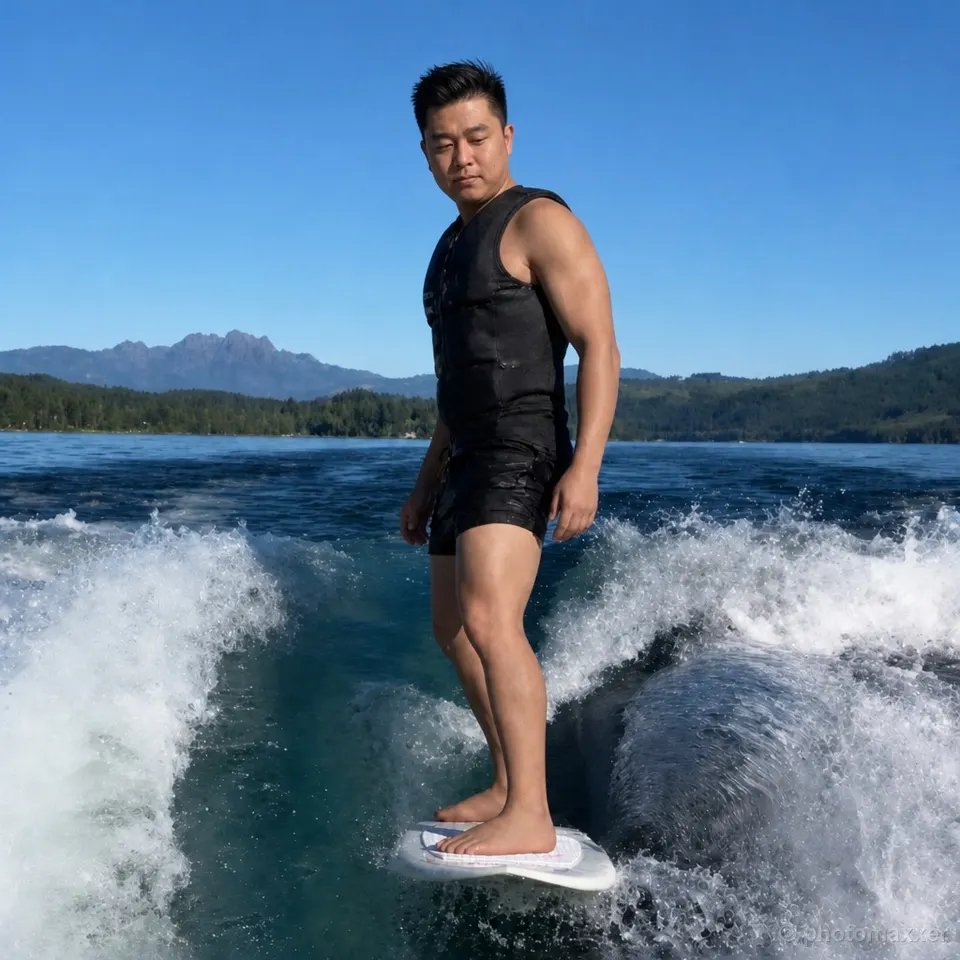
Give the viewer something to imagine doing with you
Jason is the only person visible in this wakesurfing photo, but the picture has plenty going on. His balance, the board and the wave show an activity in progress. The wider lake gives it a setting someone could imagine enjoying.
That makes it more than a solo portrait. It introduces physical capability and an outdoor interest. In Photomaxxer's framework, capability can support Ruggedness. The photo doesn't need to show a whole boat of friends to make that contribution.
Use the same idea with an interest that fits your life. You could be cooking, playing an instrument or working on a garden. Keep the action and enough context to explain it. An ordinary activity with you involved can tell more of a story than a spectacular background where you're barely visible.
You don't need to copy the sport or spend money on an outing for the photo. Look through what you already have and ask: “What could someone learn about how I spend my time?” The hobby-photo guide covers quiet interests as well as shared activities.
Add warmth without forcing a party scene
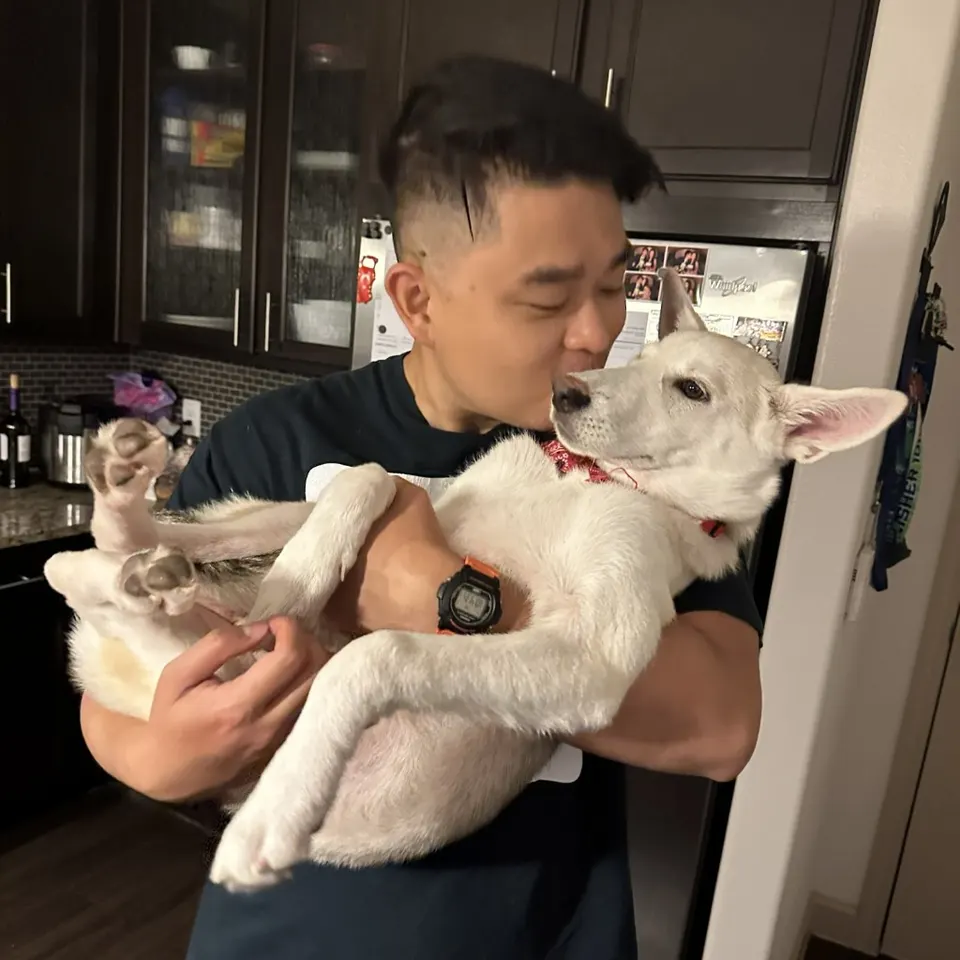
The dog photo changes the impression. Jason's attention is on the animal, and the closeness makes the scene affectionate. It adds Charm alongside the capability in the water-sport photo.
This isn't a substitute crowd. It's a different reason to be interested in him. A profile can build on several strengths without making every picture prove the same thing or trying to maximize all nine traits.
If you don't have a pet photo, look for a relaxed expression or a playful moment. You might be laughing at something just outside the frame, enjoying a meal or reacting to a friend behind the camera. The person you're responding to doesn't have to appear for your expression to come through.
Keep the moment believable for you. You don't need to borrow a dog or arrange a party to fill a supposed requirement. If a pet is part of your life, the dog-photo guide explains why the interaction matters more than simply placing an animal beside you.
Check what your solo photos are actually saying
The risk with an all-solo lineup is repetition. Six pictures can show one person in six places while communicating little beyond appearance. Before looking for more people to put in the frame, check whether you have enough variety in expression, involvement and distance.
Build from the pictures you have
- Find an interest
Choose a scene that shows what you enjoy or do. Keep the useful activity in view.
- Bring in warmth
Look for an expression or interaction that adds a more personal side.
- Read them together
Can someone recognize you and learn something new as the photos change?
These are useful questions for the lineup, not a required number of photos. Keep each picture for what it adds.
Try describing every shortlisted picture in a short phrase. “Balancing on a board,” “affectionate with a dog” and “relaxed during an outing” offer different information. If your descriptions keep coming back to “standing and looking at the camera,” find a more involved moment.
That doesn't make a camera-facing photo a problem. A clear expression can be exactly what a lineup of distant activities needs. The point is to avoid asking every picture to do the same job.
Let a closer photo introduce the person in the activity

Jason's kayak photo brings his expression closer while keeping the water, boat and rock wall in view. It shows another side of an outdoor outing: a relaxed pause rather than balancing in motion.
Alongside the wakesurfing photo, it makes the person easier to connect with. Alongside the dog photo, it continues an interest in being outdoors. Whether it earns a separate slot depends on how much outdoor activity you want the whole profile to emphasize.
Don't treat these three examples as a complete profile template or a fixed order. Use their different jobs to assess your own options. A quieter hobby or a dressed-up occasion could add more than a second water activity if you already have that side covered.
You don't have to explain the missing group photo
A profile shows a selection of pictures, not an inventory of your friendships. You don't need to write “I promise I have friends” or apologize for appearing alone. Use the space to give someone a concrete detail about your interests or the kind of time you'd enjoy together.
For example, a cooking photo could sit near “My ideal Sunday includes making enough pasta for leftovers.” The photo shows the activity; the words make it easier to imagine the routine. Our photos-and-prompts guide has more ways to build that connection.
If a strong group photo becomes available later, compare it with what it would replace. Engaged interaction can communicate Popularity in a way a solo activity doesn't. Keep it when that adds something useful. You still don't need to squeeze in an unclear group shot merely to tick a box.
For now, choose the strongest pictures you have and identify one specific missing moment to capture next. “A relaxed photo while I'm doing something I enjoy” is a useful brief. “Proof that I'm social” is much harder to photograph naturally. Start with a life someone can understand and a person they can recognize.