Smiling vs Serious Dating Photos: Choose the Expression That Fits
Let the expression fit the moment.
You don't need to smile in every dating photo. You do need a profile that makes spending time with you look appealing. A warm grin, a focused expression and a laugh can each help, depending on what's happening around them.


Read the expression with the scene
Rohan's mountain photo has a serious expression, winter gear and open terrain behind him. Together, those details give it a rugged feel. At the stadium, his smile and the friend beside him make the picture feel more sociable. The first says something about outdoor adventure; the second makes his company look inviting.
These aren't two versions of the same portrait, so they don't prove that a smile or a serious face performs better. They show why judging the mouth alone misses the point. The setting and the people change what the expression means.
If your profile already feels intense, a picture like the stadium shot can add warmth. If you've got plenty of relaxed social photos, a more serious outdoor image can add another side. Keep the expression that helps the picture do its job, then check how it fits the lineup.
Give a serious expression something to belong to
Concentration makes sense when you're climbing, playing an instrument or working through a move in a sport. You don't need to stop an activity and grin at the camera just to make it suitable for a dating app. Keep enough of the activity in the frame that someone can understand your attention.
A stern close-up against a blank wall has less to work with. It might show your face well, but it leaves the viewer to guess whether you're calm, uncomfortable or annoyed. A frown doesn't create Ruggedness by itself. Visible effort, capability and the environment do much more to explain that impression.
Try a simple comparison: cover the background of your serious photo, then uncover it. If the gear, movement or surroundings make the expression easier to understand, keep that context in your crop. Our sports-photo guide shows how the activity can carry the image.
A smile works best when the moment supports it
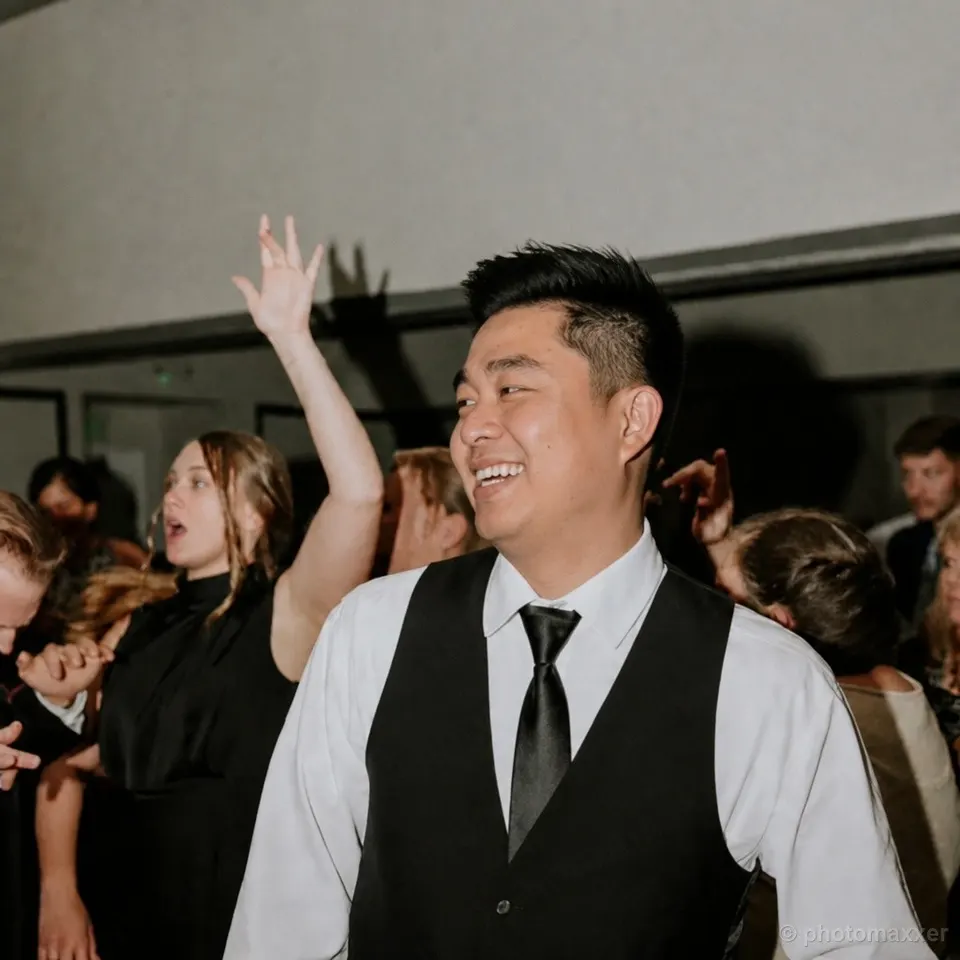
Jason's laugh belongs to the celebration around him. The raised hands and animated guests make it easy to read him as part of the fun. The expression adds Charm, while his involvement in the group supports Popularity. This photo has more to offer than a smile isolated against a plain background.
You don't need an enormous laugh in every picture. A small smile while talking across a table can be just as useful for showing ease. Choose the frame where your expression fits your posture and the interaction. If you're holding a grin while the rest of your body looks braced for the shutter, try another moment.
For new photos, give yourself something to react to. Talk to the friend taking the picture, keep playing the game or carry on with the toast. Ask for a few frames rather than holding one expression for ages. You'll have different moments to choose from instead of several copies of the same strained pose.
Decide what your profile needs from the expression
Pick the mood that earns its place
- Does it fit?
A laugh at a party or concentration during an activity? Keep the expression tied to the moment.
- What comes across?
Welcoming company, playful energy or outdoor capability? Read the whole scene.
- Is that missing?
Add warmth to an intense lineup, or a different side to a row of similar smiles.
If the expression fights the scene, choose another frame before worrying about photo order.
Put your shortlisted photos next to each other. Several unsmiling close-ups can make a profile feel distant, even if you like your face in each one. Several smiling portraits can feel repetitive, too. Changing the location doesn't always change the impression.
You aren't trying to fill a smiling slot and a serious slot. You're choosing photos that work together. A warm interaction may add more than another handsome portrait. An action shot may add more than another warm interaction. Use the whole-lineup guide when several individually good pictures keep saying the same thing.
You can look warm without smiling at the camera

Jason isn't showing the camera a grin here. His attention is on the dog, and the way he holds it makes the picture affectionate. That interaction communicates Charm without needing eye contact or a visible smile.
This is a useful alternative if posed smiles keep looking awkward. Look for a photo where you're responding to someone or something. You can be welcoming through your attention, posture and involvement. A closed mouth doesn't automatically make a picture cold, just as showing teeth doesn't automatically make it warm.
The same applies to Humor. A big smile isn't a joke on its own. A playful situation or shared reaction gives someone something to enjoy. Pick the moment first; let the expression support it.
Should you show teeth, and which expression goes first?
Don't force a teeth-showing smile if a smaller one looks more relaxed. Compare actual frames at phone size. Can you read the expression? Does it suit the scene? Does the photo make you look like good company? Those questions are more useful than a rule about how wide your mouth should be.
Your first photo should be a compelling introduction, whether you're smiling or serious. A social photo with an easy smile can work; so can a strong activity photo with a focused expression. If a serious opener leaves the profile feeling remote, follow it with a warm, recognizable interaction. Our first-photo guide covers choosing the introduction.
Photomaxxer reviews photos and the whole profile across Face, Height, Physique, Money, Ruggedness, Status, Popularity, Charm and Humor. Use the feedback to spot what a picture contributes. Expressions aren't a shortcut to all nine traits, and you don't need equal amounts of each. The aim is a profile where different photos give someone more reasons to want to meet you.