Sports Photos for Dating Apps: Show More Than the Gear
Keep the action. Show the person.
A good sports photo gives someone more than “I exercise.” It can show that you're capable, adventurous or fun to spend a Saturday with. Choose the moment that makes that impression clear, then check whether your other photos already say the same thing.

Action shot or a photo with your gear?
Jason's two water-sport photos do different jobs. In the wakesurfing shot, his balance, the board and the wave make the activity obvious. There's something happening. The wider setting lets you imagine being out on the lake with him, rather than just admiring a portrait.
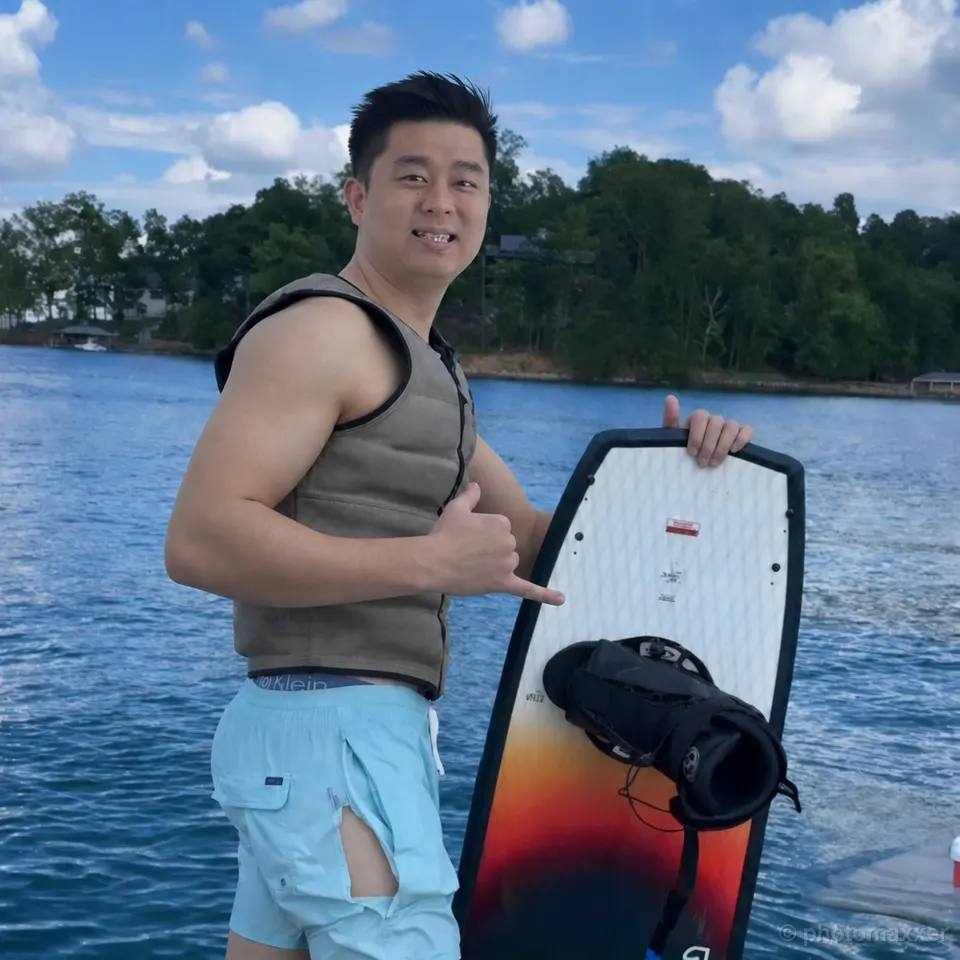
The photo with the wakeboard is quieter. His smile is easier to read, and the board and life vest keep the hobby in the frame. It introduces the person and the activity together. It doesn't show the same physical skill as riding a wave, but it doesn't need to.
Choose the action shot when the movement is readable and capability is the side your profile needs. Choose the pause between runs when it gives you a stronger expression or a better sense of what you're like to be around. If both are strong, compare them with the rest of your lineup before giving similar water-sport photos two slots.
That choice is useful for running, climbing, tennis and other sports too. A frame of you making a shot can show coordination. A relaxed moment beside the court can show personality. A pile of equipment without you in it mostly tells someone what equipment looks like.
What sports photos can add to a dating profile
In Photomaxxer's framework, visible toughness and physical capability can support Ruggedness. A sport can also show Physique through movement and clothing that fits the activity. Those are different impressions: looking muscular and looking capable aren't interchangeable.
A full-body ski photo might help communicate Height. A celebration with teammates can add Popularity when you're engaged with each other. A playful moment can add Humor. Look at what the photo actually shows instead of assuming every sports picture covers all of those traits.
Equipment alone doesn't establish Money or Status. A trophy presentation or a visible leadership role can communicate achievement or authority, while an expensive-looking jacket mostly shows a jacket. You don't need an elite sport or a podium to make your weekends appealing.
The dating question is simple: what would someone enjoy about being around you? Confidence on the water, an easy laugh after a game and a sociable club outing offer different answers. Pick the one that fits you.
Keep the activity readable on a phone

MJ's ski photo leaves room for the slope, winter clothing and pole. His goggles sit above his eyes, so you get both the person and the setting. Cropping it into a face-only portrait would throw away much of the reason to use it.
You can keep helmets, goggles and sunglasses when they're part of the sport. A fully covered face can still work in an activity photo if the rest of the profile makes you easy to recognize. But several distant, covered-up shots can leave someone knowing your hobbies better than your face. Give those frames a clearer companion.
Check the actual upload preview. Keep the board, ball, racket or part of the landscape that explains what's happening. If a crop cuts away the wave under your feet, you lose the action. If you're a tiny speck against a mountain, try a closer frame before deciding the view deserves a slot.
Which frame earns the slot?
- Read the activity
Can't tell what's happening? Keep more context or choose another frame.
- Find the person
Face hidden by the sport? Pair it with a photo that makes you recognizable.
- Add a new side
Already have the same impression? Try a social or warmer moment.
Keep the frame that tells someone something useful about dating you.
Don't leave the social part on the sidelines

Chris's lakeside photo keeps a friend and the paddle in the frame. Their close stance adds a social side to the outdoor setting. You can see companionship as well as an activity. Cutting the friend out would make it a different, less informative photo.
For a team sport, look beyond the official lineup. A shared laugh on the bench, a congratulatory gesture or a conversation after the game can show how you fit into the group. Engaged interaction is more useful for Popularity than strangers who happen to be standing behind you. Our group-photo guide goes deeper into choosing those moments.
A stadium photo can show that side too, but it tells a different story from playing. Watching a game with friends can communicate a social routine and a shared interest. It doesn't show athletic skill just because there's a pitch in the background. Use it for the contribution it actually makes.
How many sports photos should you use?
There's no useful quota. If sport is a big part of your life, more than one photo can make sense. A solo action shot and a warm team celebration may tell two different stories. Three nearly identical summit poses probably won't, even if each mountain has a different name.
Try swapping the most repetitive sports photo for your strongest non-sport option. Does the lineup now show a side that was missing? A dinner, a celebration or a good interaction with a dog might add warmth beside a rugged action shot. Keep whichever version gives a fuller impression of you.
Photomaxxer's data-backed photo and profile feedback evaluates Face, Height, Physique, Money, Ruggedness, Status, Popularity, Charm and Humor. Use that feedback to compare the whole lineup, not just to chase an isolated photo score. The goal isn't equal coverage or maximizing every trait. It's choosing strengths that work together.
A sports photo can lead when it's your strongest introduction and you're recognizable in it. You don't have to put a solo headshot first. If the action needs another picture to establish who you are, it may work better later. See the first-photo guide for that decision.
Get a useful photo next time you play
Ask a friend for a few frames of the activity and one during a natural pause. Give them a concrete brief: keep you, the equipment and enough of the setting to understand the scene. For movement, a short burst can help catch a readable position. Between attempts, talk to them instead of freezing into a formal pose.
Review the pictures at phone size. Pick for the moment first, then check whether blur, shadows or the crop make that moment hard to read. A technically crisp picture of you looking bored beside a bike isn't automatically better than a slightly imperfect frame with energy and personality.
Finally, add one specific detail in your profile text if it opens a conversation. “Sunday doubles, followed by a very serious pastry stop” gives someone more to respond to than “active lifestyle.” Hinge lets people like and comment on a specific part of a profile, so give them something concrete to notice. The photo can show the sport; the words can show what spending that morning with you would feel like.