How to Pose for Dating Profile Photos: Give Your Hands Something to Do
Use small actions and real interaction to make the pose feel comfortable.
If you freeze when someone points a camera at you, start with one thing to do: carry what belongs to the occasion, turn toward your company or take a few steps. A useful dating-photo pose gives your body a reason to be where it is. The result should help someone picture your company, whether you're playful, active or relaxed.
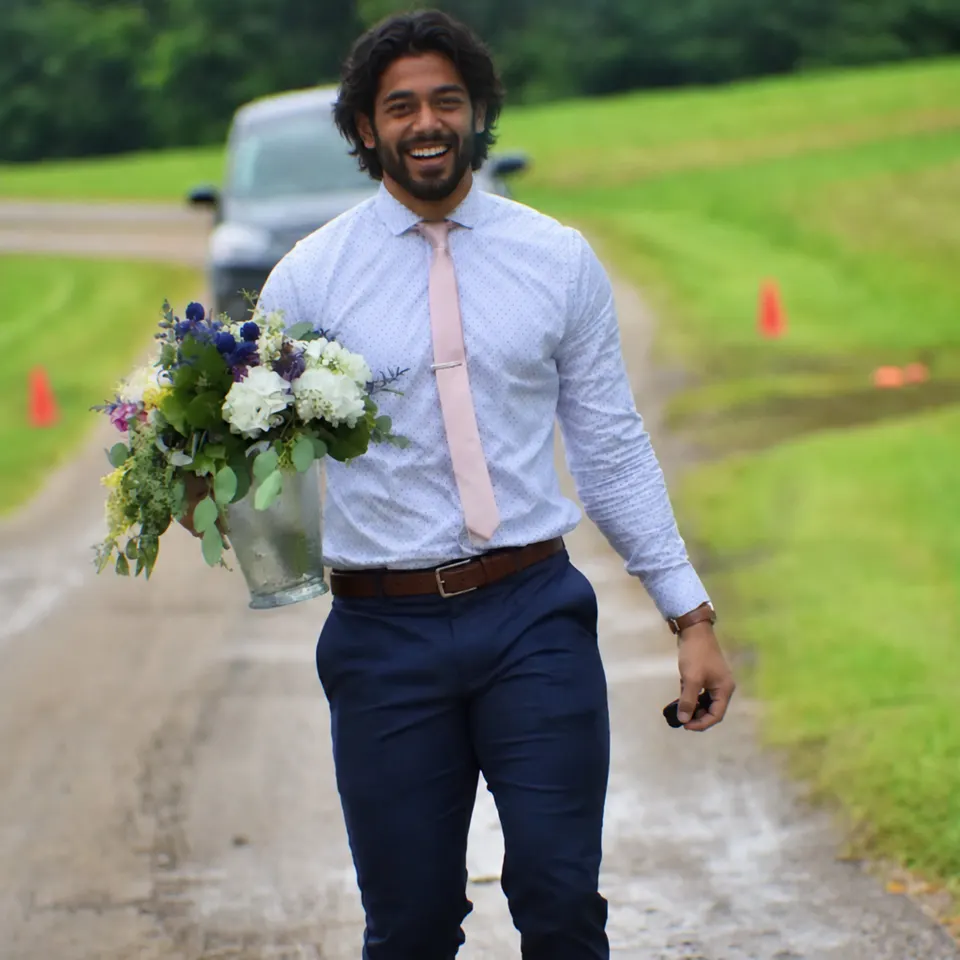
Give your hands a job that belongs to the moment
Rohan's flower photo gives you a concrete starting point. One hand carries the arrangement, the other holds sunglasses, and his walking stance keeps the picture from feeling frozen. His broad smile and the flowers make the scene warm. You notice a person arriving with something to offer.
The useful lesson isn't to buy flowers for every photo. It's to use what's already part of the occasion. Hold the picnic basket you're carrying, rest a hand on your board after a session or keep the book you were reading in your lap. Let the object explain an interest or a moment.
When there's nothing to hold, you don't need to invent a prop. Let one arm hang comfortably, rest a hand on the table or put a hand in a pocket if that's how you naturally stand. Try one option, then move on. Repeatedly checking both hands can make the whole photo feel like an exercise in hand placement.
Keep your hands from hiding the part of the scene that matters. A glass held in front of your smile or a large bag covering the interaction can weaken an otherwise useful frame. Check the finished picture, rather than trying to remember a long list of posing rules while it's being taken.
Turn a little without turning it into a formula
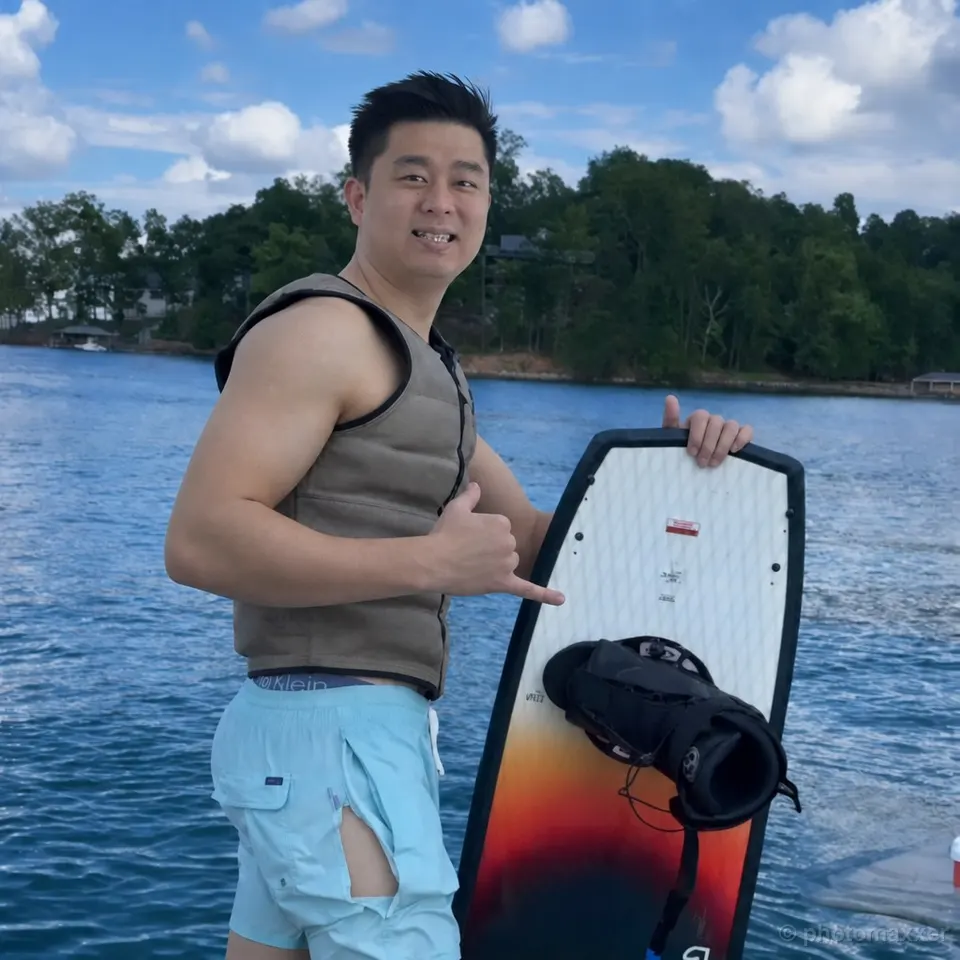
Jason's board photo is clearly posed, and that works. His body is turned slightly, his face comes back toward the camera and one hand rests on the board. The other makes a playful gesture. The lake and gear explain why he's there; the smile makes the pause feel sociable.
For a standing photo, try facing your friend, then turning your body a little while keeping the conversation going. Stand comfortably rather than locking your knees and pulling everything rigid. Let the photographer take a few frames as you settle. You're looking for an easy stance that fits the occasion, not a precise angle everyone has to copy.
A front-facing stance can be just as useful. A slight turn is something to try when you feel stiff, not a requirement for every picture. Keep the position that makes you look involved and at ease.
Notice what this photo does and doesn't show. Jason looks ready for an afternoon on the water, but holding the board isn't the same as demonstrating skill on it. The sports-photo guide compares that relaxed pause with an action shot. Both can contribute to a profile for different reasons.
Feeling stiff? Change one thing.
- Hands feel awkward?
Hold something that belongs, or let an arm rest. Keep the useful detail visible.
- Body feels frozen?
Take a few steps, turn toward someone or settle into a comfortable seat.
- Expression feels forced?
Talk to the photographer and react. Pick a frame between held expressions.
Choose one small action. You don't need to perform all three at once.
Let the interaction decide the pose

MJ's puppy photo is an unusual pose, but it makes sense within the moment. He's reclining on the court with the puppy on his chest, and his hand supports the dog. The smile, closeness and slightly silly setting make the picture feel warm and playful.
You don't need to copy the position on the ground. Copy the attention to the interaction. Sit beside your dog at its level, turn toward a friend who's speaking or lean into a shared laugh. The pose follows what you're doing together.
That can communicate Charm through warmth or Humor through a lighthearted moment. A more upright stance isn't automatically a better dating photo if it removes the part that made you enjoyable to look at.
When sitting at dinner, turn enough toward your company to stay part of the conversation. Let your arms rest where they normally would, then look toward the photographer for a moment if you want a direct introduction. Avoid spending the whole meal holding the same smile while someone searches for an angle.
Use a short sequence instead of holding one pose
Give your friend a simple brief: “Get a few as I walk over, then one when I stop and look at you.” At a table, try: “Take a couple while we're talking, then tell us when to look.” Those instructions create a few useful choices without turning the outing into a shoot.
If your smile starts to feel fixed, stop holding it. Talk, look back at what you were doing and try again. A relaxed serious expression can fit some scenes too. Match the expression to the moment; the smiling-versus-serious guide goes deeper into that choice.
Keep enough room around you for the thing that explains the pose. Hands holding a board, feet on a trail or the friend you're reacting to can be essential context. Check the app's crop before deciding that a tight version is better.
Choose the pose for what it adds to your profile
Review the results with a dating question: what would someone enjoy about being here with you? Rohan's flowers suggest a thoughtful arrival. Jason's board photo feels like a cheerful pause during an active day. MJ's puppy moment brings warmth and playfulness. They work for different reasons.
You can keep posed and spontaneous pictures together. Our candid-versus-posed guide explains how to choose between those moments. For posing itself, start with one natural action and stop adjusting once the person and the occasion come through.