Indoor Dating Profile Photos: Show More Than the Room
Make the activity, company and expression easy to read indoors.
Good indoor dating photos show something worth joining: a game, a meal, a relaxed moment with a pet or an interest you enjoy at home. Start with what's happening, then arrange enough space and light to make it readable. You don't need an impressive apartment or an empty room. You need a picture with more to offer than the walls.

Give the indoor photo something to show
Jason's dog photo has an ordinary kitchen around it, but the interaction holds your attention. He's cradling the dog close to his face. The affectionate moment can convey Charm without needing a scenic view, a formal outfit or a large group.
Use that as the starting point for your own indoor picture. What are you doing that someone might enjoy seeing or sharing? Making dinner, playing a game, practicing an instrument or spending time with a pet can give the frame a purpose. Choose something that belongs in your life instead of borrowing props for a photo.
A room can support the story without becoming the subject. In Jason's picture, the cabinets and refrigerator explain the everyday setting. The dog and his attention to it give the image its dating-profile value. A wider view of the kitchen wouldn't necessarily add anything useful.
Prepare one useful part of the room
You don't have to rearrange the entire place. Start where the activity naturally happens, then look through the camera. Remove the unrelated items competing with the person and the action. Keep the details that explain what you're doing.
For a cooking picture, leave the ingredients and the dish in progress visible. Move the delivery packaging and unrelated pile of mail out of the frame. For a game, keep the board and the people playing; the empty chair at the far end of the room probably matters less.
Check mirrors and reflective cabinets too. They can add another view of the room that you didn't notice while setting up. A small change of position may simplify the picture without wiping out its setting. Take a test frame before asking everyone to hold still.
Don't clear away so much that the activity becomes impossible to read. A neat wall behind a seated person may be easy to photograph, but it won't automatically communicate the hobby or shared time you wanted to show.
Make room for the camera and the activity
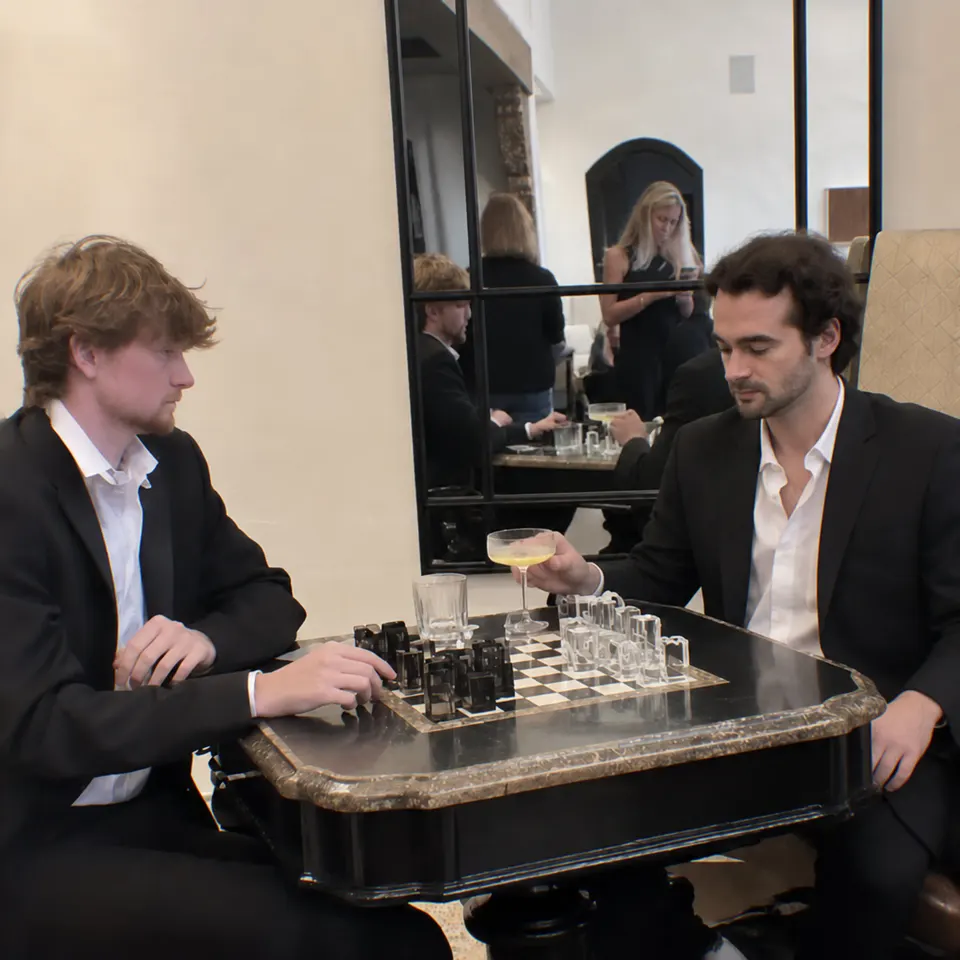
Chris's chess scene includes both players and the board between them. That relationship is the useful part of the composition. Move too close to either face and the shared game disappears; move too far away and the room can overwhelm the interaction.
For a tabletop activity, try a position where the camera can see your expression, your hands and the object connecting you to the other person. Ask the photographer to move a little to either side and compare the result. You don't need to copy this exact room or seating arrangement.
If the room is tight, try the camera from a doorway or move one chair rather than squeezing everyone into a corner. Keep your stance or seat comfortable enough to continue the activity. When a position makes the game, conversation or meal awkward, it usually isn't worth maintaining just for the picture.
If you're taking the photo yourself, put the phone on a stable support and make a test shot from where you'll actually sit or stand. Check what's included before starting the timer. Our tripod guide covers getting a usable frame while leaving your hands free for the moment.
Set up the moment, then get on with it
- Choose the activity
Give the picture an interest, interaction or occasion to show.
- Make some room
Keep the person and useful details visible. Move the unrelated clutter.
- Try a frame
Check the expression and action, adjust your position, then carry on.
The room supports the photo. It doesn't need to be the reason someone likes it.
Find a readable spot without losing the atmosphere
At home during the day, try the activity near a window if the layout allows it. Check that you can see your expression instead of putting the brightest part of the room behind your head. Move yourself or the camera a little and compare. The lighting guide goes into those adjustments.
At an evening gathering, keep the feeling of the room while choosing a spot where the faces and gestures are readable. A warm lamp or venue lighting can belong in the picture. You don't have to make every indoor photo look like it was taken outdoors at noon.
Take a few frames during a natural pause, then check them. If movement has made every expression unreadable, try a quieter moment in the same activity. For a pet, that might be a comfortable pause beside you rather than a fast game. Work with what the people or animal are happy doing.
Use indoor occasions as well as home routines

MJ's dinner photo adds a different indoor mood. The smile, company and table setting make the dressed-up outfit feel part of an enjoyable occasion. The room doesn't have to prove anything about his money or status for the picture to work.
Look for a pause at a dinner, gathering or shared activity you already want to attend. Ask for a frame while the people and setting still explain the evening. If the table hides everything that matters, try another position nearby instead of spending the meal adjusting the camera. The restaurant-photo guide explores that choice.
Home routines and social occasions can earn different places in a profile. One shows a quieter kind of company; another shows how you fit into a shared evening. Indoor doesn't mean solitary, and a small setting doesn't mean an uninteresting life.
Keep the indoor photo that adds a different side of you
Compare the result with your existing lineup. If every picture is an outdoor adventure, a warm indoor interaction can make the introduction feel more rounded. If you already have several similar dinner photos, moving to another table won't add much. A game, pet or creative activity may give someone something new to notice.
Look for visible qualities rather than a quota of settings. Care can communicate Charm; playful interaction can add Humor; enjoyable company can support Popularity. You don't need equal numbers of indoor and outdoor photos, or a picture for every trait.
Keep the frame where the person and the moment are easiest to understand. A room that's less impressive on its own can still produce the more inviting dating photo.