How to Ask a Friend to Take Dating Profile Photos
Give your friend a clear, short request that keeps the outing in the picture.
Ask a friend for a specific moment: “Can you get a few of us with the paddles before we leave?” That's easier to act on than “Make me look good.” A useful brief tells them what you're doing, what belongs in the frame and how little time you need. You can be open about wanting better dating photos without turning the outing into a production.

Tell them what makes this moment worth photographing
Chris's lakeside photo gives a useful example of what to ask for. The friend, paddles and water explain the outing together. A tight face crop would lose much of that. For a similar moment, “Keep both of us and the paddles in, with some lake behind us” gives your friend a clear job.
Pick the contribution you want before you hand over the phone. Maybe your profile needs a warmer expression, a shared activity or a view of a hobby you care about. Describe something the camera can capture. “Get us laughing at the table” is workable. “Make me look popular” leaves your friend guessing.
You can use the same approach without an impressive location. Ask for a frame while you explain a board game, put the finishing touch on dinner or talk with people after a match. The activity gives your expression a reason and makes the picture easier to connect with.
Ask early and keep the favor small
Before you meet, try: “I'm updating my dating profile and could use a photo from today. Would you grab a few when we stop for a break? Happy to take some of you too.” Your friend knows why you're asking and can look for a natural opening.
At the outing, wait for a pause. Give them one brief instead of a list of instructions about your chin, shoulders, smile and camera angle. If you already know a useful frame, show it quickly and explain the part you like: the people, the activity or the relaxed feel. You don't need them to reproduce someone else's pose.
Agree on a stopping point. One short attempt during a break is easy to fit around the day. If the moment isn't working, move on and try another occasion. A friend who's enjoying themselves can help again without feeling responsible for your whole profile.
Three things your friend can act on
- Name the moment
“Get a few while we're talking after the game.”
- Keep the context
“Leave us, the equipment and a bit of the court in.”
- Check one frame
“Let's see if the action reads, then we'll get back to it.”
One clear request is enough to start. Adjust after you've seen a picture.
Give yourself something comfortable to do
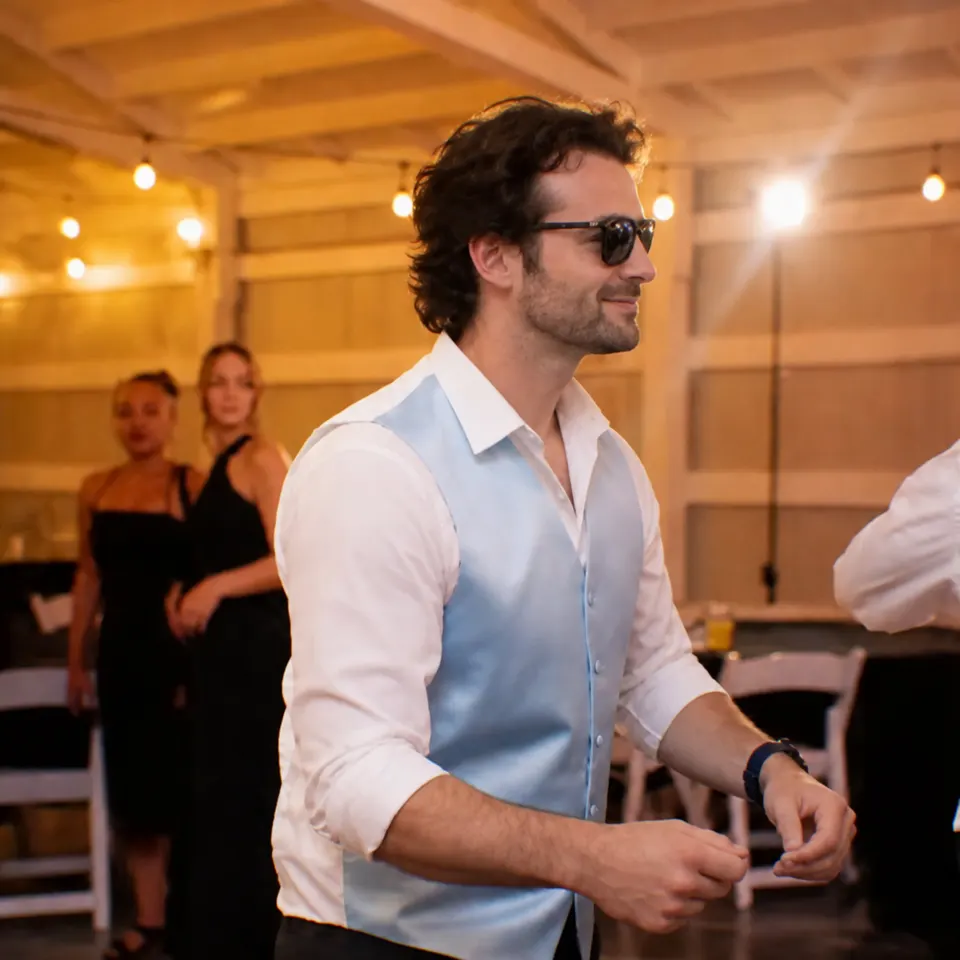
Chris's dance-floor photo has a relaxed turn and hands that belong to the movement. The guests and lights keep the occasion visible. It illustrates a useful direction for your own photos: stay involved in what's happening while the camera catches a short stretch of it.
Try: “Take a few while we're dancing; keep some of the room in.” At a quieter gathering: “Get a couple while I tell this story.” Let your friend take several frames without asking you to freeze after each one. Then you have expressions and gestures to choose between.
If that feels awkward, start with a simple photo facing the camera. Once you have it, return to the activity and ask for another short sequence. You don't need to perform a laugh or pretend the phone isn't there. Our candid versus posed guide explains how both kinds of moment can work.
Make the first correction concrete
Look at one test frame together. Start with what should stay: “The people and the table are good.” Then name the missing detail: “Could you step back enough to include my hands?” That is easier to fix than “This looks weird.”
If you're too small, ask them to come closer while keeping the part of the setting that explains the activity. If the expression is hidden, try a different position relative to the light. The lighting guide covers that adjustment. Change one thing and take another short sequence before adding more directions.
Keep your friend in the conversation between attempts. Looking at someone you know can give you something more natural to respond to than staring silently at a lens. Check the posing guide if you need a simple starting position.
Remember the easy photo before everyone moves on
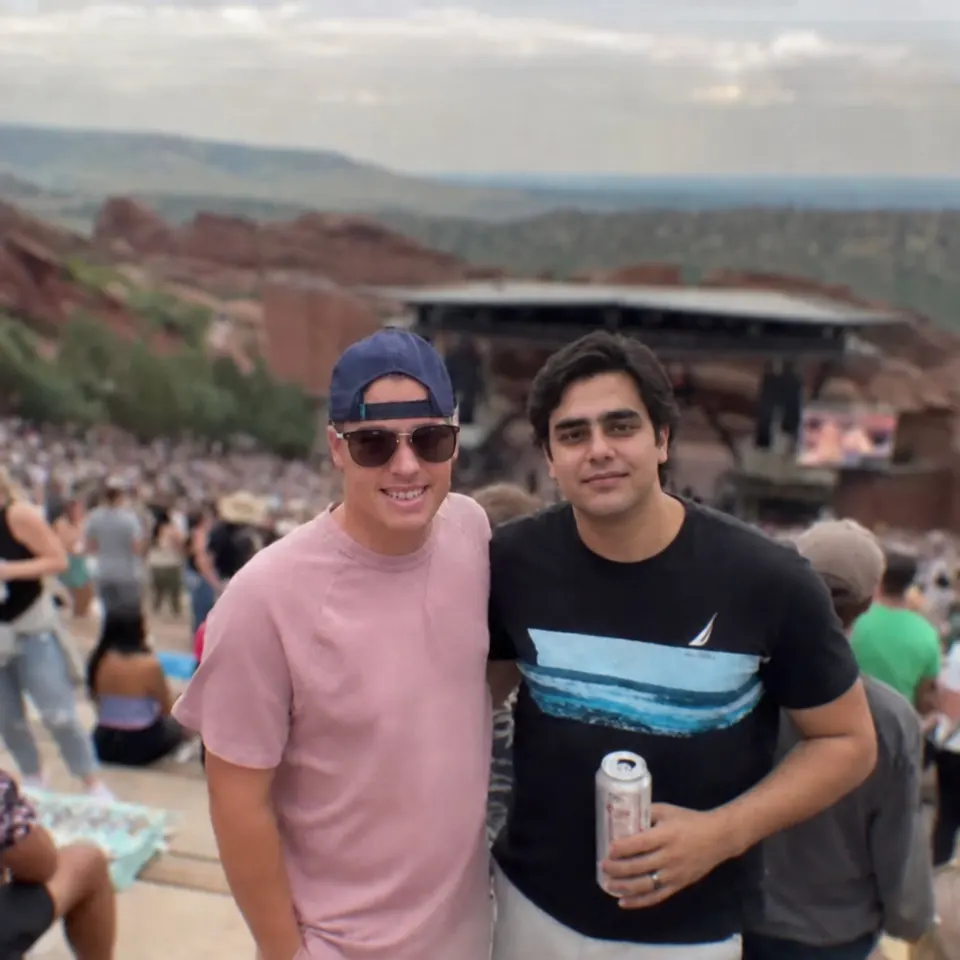
Zain's concert photo shows how much a straightforward pause can include. You can read the two people, the venue and the shared interest at once. You don't need a complicated action in every frame to make your social life visible.
Before a show, after a game or on the way out of dinner, ask: “Can you take one of us here before we go?” Keep the people you're with in the picture when their company is part of its value. You can choose later whether it complements your solo photos; the group-photo guide helps with that decision.
If your friend used their phone, ask for the original files rather than a screenshot of the preview. Thank them, offer to return the favor and choose your shortlist afterward. The outing only needs to give you a useful option. It doesn't have to supply every photo in your profile.