Dating Profile Photos When You're Camera Shy: Start Small
One familiar plan and one small photo request.
If you avoid the camera, start with one familiar plan and one small photo request. You don't need to become comfortable posing for an entire afternoon before you can get a useful dating picture. Give the photo something to be about, then let yourself take part in it.

Choose something you can pay attention to besides the camera
MJ's puppy photo has a clear point of attention. His hands are with the dog, his expression is warm, and the court keeps the scene connected to a day out. You don't need to copy the pose. The useful idea is having a person, pet or activity to respond to instead of standing still and wondering what your face is doing.
Pick something familiar: making lunch, playing a game, showing a friend a project or spending time with a pet you know. Choose a moment you'd enjoy even if no photo came from it. The activity gives the picture information about you as well as giving you something to do.
Keep the first attempt somewhere you won't feel on display. If a crowded park makes you conscious of every passerby, start at home or during a quiet part of an outing. You can show an appealing life through a small, comfortable moment. It doesn't have to begin with a big public performance.
Tell one person what would make this easier
Choose a friend who will take the request seriously without turning it into a running joke. Be specific: “I get awkward when the camera comes out. Could you take a few while we talk, then we'll put it away?” That sets a manageable task and a clear end.
You can also ask them to skip the countdown, keep chatting or avoid giving a stream of posing instructions. Pick the one adjustment you want most. “Keep talking to me while you take it” is easier to follow than a long list of things you dislike about photos.
Agree when they're taking pictures. You don't have to be secretly photographed to look natural, and you don't have to act surprised by a camera you asked them to use. The candid versus posed guide shows why both kinds of picture can have a place.
Make the first attempt small
- Choose a familiar plan
Use an activity or company that already feels comfortable.
- Ask for one moment
Say what to capture and agree when the phone goes away.
- Pick it later
Look for a useful expression and scene after the outing.
One usable option is progress. The first attempt doesn't have to fill the profile.
A simple posed pause is allowed
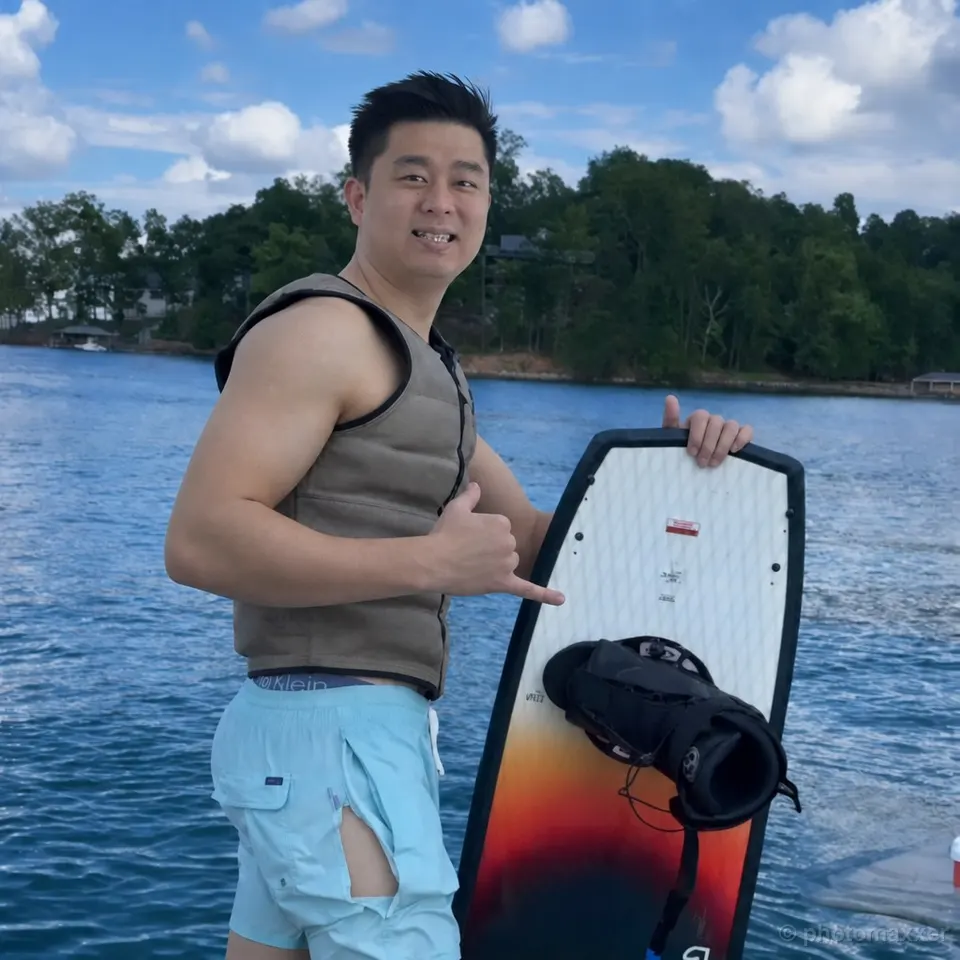
Jason's board photo is plainly posed, and there's plenty to read in it. The board, life vest and water explain the activity; his smile makes the pause friendly. He doesn't need to be mid-action for the picture to say something about how he spends his time.
If facing the lens briefly feels easier than pretending to ignore it, do that. Stand or sit comfortably, keep whatever belongs to the activity in the frame and look at the person taking the photo. Take a few frames, then return to what you were doing.
Don't make “candid” another performance you have to get right. You can try an activity photo and a straightforward posed one on the same outing, then keep whichever feels more like you. The posing guide has simple options for hands and posture if you need a starting point.
Check the setup once, choose the photo later
A quick test picture can tell you whether the camera includes the important parts. Are you visible? Is the person, pet or activity still in the frame? If something is missing, make one concrete change, such as moving closer or turning toward the light.
Then let the next few frames happen without inspecting every one. You don't need to interrupt the conversation to decide whether each blink or half-finished sentence is flattering. Those frames can simply be left out when you choose later.
When you review the photos, start at the size someone will actually see on their phone. Look for an expression you recognize and a scene that tells them something useful. Don't reject a warm, engaging picture just because another frame has a tidier strand of hair. For help from a friend, ask “Which feels most like spending time with me?” The feedback guide has more specific questions.
Build the profile in small additions
If asking someone still feels like too much for the first attempt, try a phone stand at home during an activity. Use a test frame to set the composition, then take a short sequence. Our tripod-photo guide covers that setup. You can decide later whether you'd like a friend to help with another scene.
Keep a usable photo when you get one, even if it doesn't cover everything. A warm pet photo might add Charm. A hobby picture can show an interest someone could ask about. Another day can supply a social moment or a different side of your routine.
Stop when you've reached the small request you agreed on. If nothing works this time, change one part of the plan next time: the place, the activity or who's taking the photo. Your task is to collect pictures of a life someone could enjoy sharing, one manageable moment at a time.