Selfies for Dating Apps: Which Ones Should You Keep?
Keep the moment. Cut the repetition.
A selfie belongs on your dating profile when it gives someone a good reason to be interested in you. That might be a warm moment with a dog, an outdoor activity or an evening with friends. Judge what the picture says before worrying about whose hand held the phone.
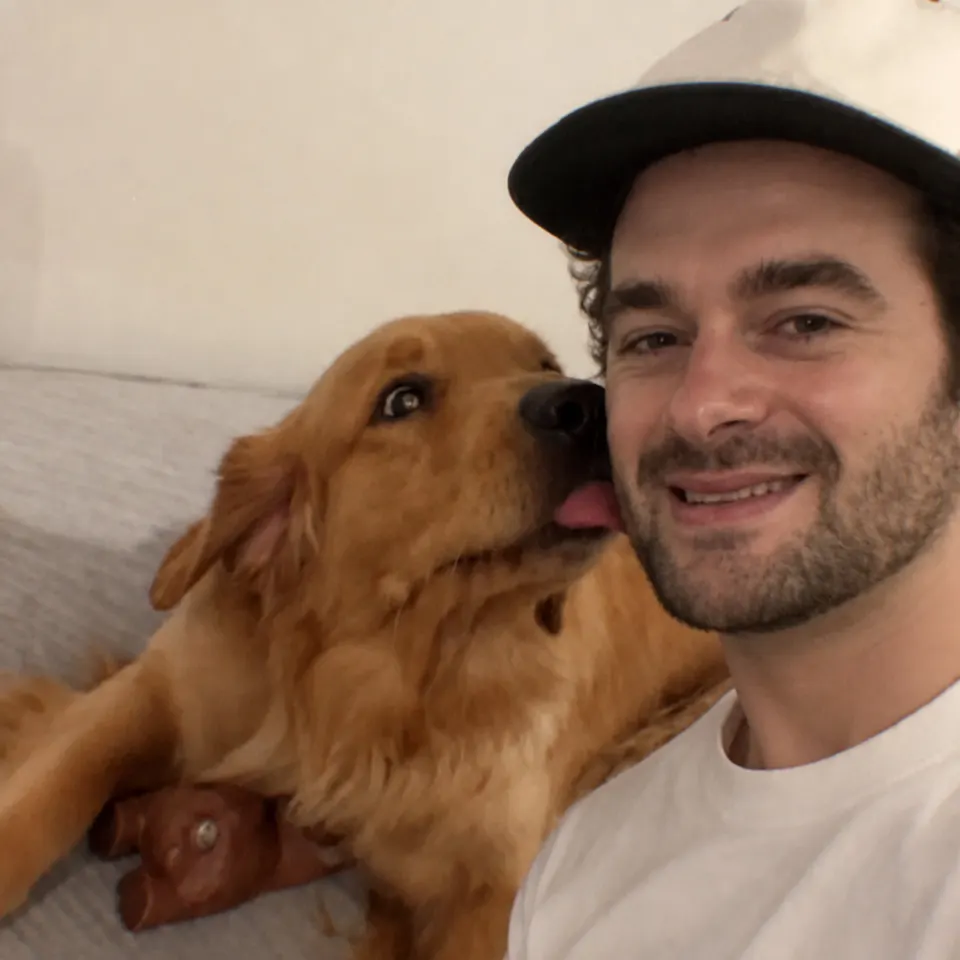
Keep the selfie with something happening in it
Chris's dog selfie is a close-up, but it isn't only a face. The dog licking his cheek and the arm around it make the image feel affectionate. His expression fits the interruption. That connection can support Charm, while the slightly silly moment gives it Humor.
A cleaner portrait on the same couch might show his face more neatly and say less about his company. That's the tradeoff to notice when you're choosing. Don't discard a strong interaction just because a technically tidier selfie exists.
Look through your own selfies for the moment someone else could respond to. “Your dog looks very pleased with himself” is an easier opening than a generic compliment about your appearance. You don't need a pet to create that opportunity. Friends, an activity or an expression that belongs to the scene can give the photo a purpose. Our dog-photo guide goes deeper on choosing the interaction.
A solo selfie and a group selfie can do different jobs
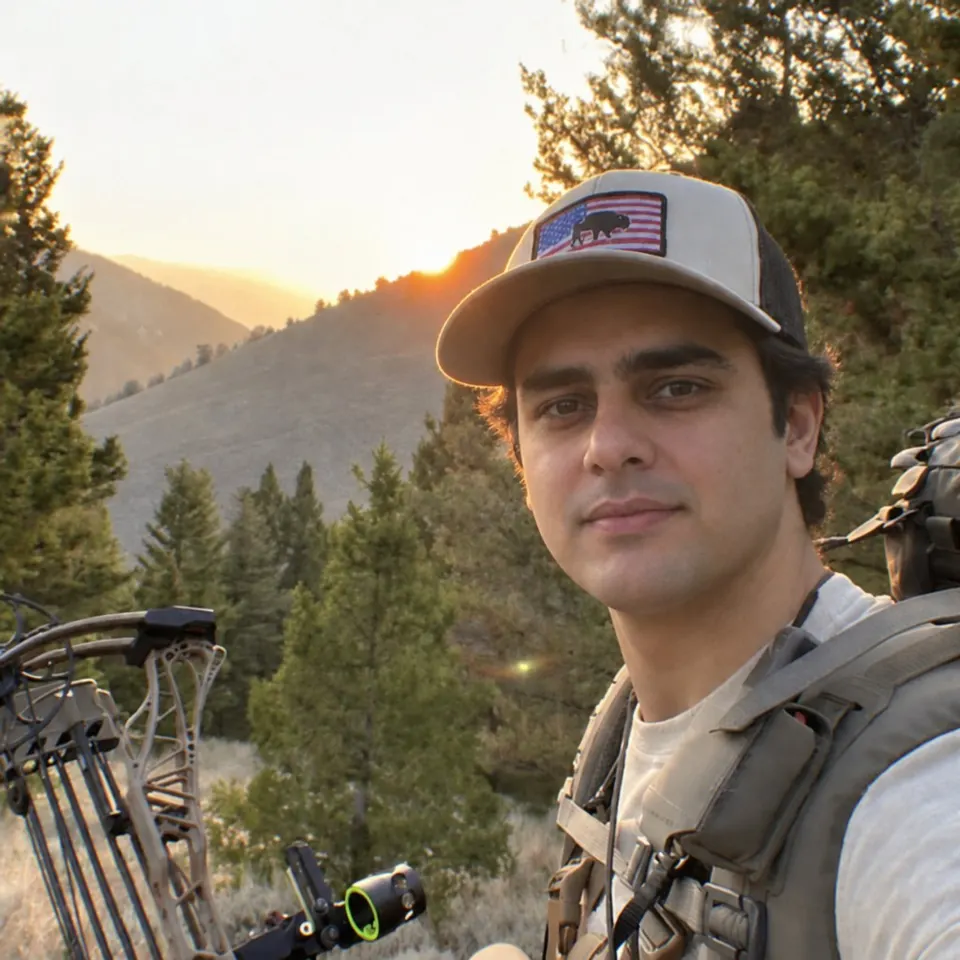

Zain's mountain selfie leaves room for the pack, bow and landscape. Those details make the picture feel outdoorsy and rugged. A crop around his face would remove much of what distinguishes it from a selfie taken at home. His face is recognizable without having to fill the whole frame.
Chris's balcony selfie does something else. He's close to the camera, but friends, drinks and the view share the frame. The smiles and closeness make it feel social. That shared involvement can support Popularity. Simply having strangers in the background wouldn't communicate the same connection.
These are useful options for different gaps. If your profile already has several outdoor shots, the social selfie might add more. If your lineup is all dinners and parties, an outdoor selfie could bring a new side into view. Neither format wins automatically.
Check identification in a group selfie. Can someone who has seen your other photos immediately find you? Keep the friends who explain the moment, but pick another frame if the group is so large or tightly cropped that you disappear. The group-photo guide covers that balance.
Use the rest of your profile to decide
Try removing the selfie from your lineup for a moment. What disappears? If the answer is your warmest expression, a hobby or the clearest view of time with friends, the image has a useful role. If nothing changes except the background behind your face, you may have found a duplicate.
Keep the contribution, not every favorite
- Name what it adds
A warm interaction? An outdoor interest? A good night with friends? Be specific.
- Find the overlap
Put it beside the photo that says the most similar thing, even if that photo isn't a selfie.
- Choose what stays
Keep the stronger moment. Use the freed slot for a side of you that's still missing.
No overlap, and it shows you well? The selfie may already have earned its place.
For example, compare a smiling café selfie with your smiling dinner portrait, not just with your other selfies. If the dinner portrait also shows you engaged with friends, it may give the same warm expression more context. If the dinner photo is stiff and the café selfie feels relaxed, the selfie may be the better choice. Make the decision from the pictures you have.
When car and mirror selfies add too little
A car selfie can give a recognizable view of your face. Several car selfies usually keep returning to that same information: you, seated, looking into the phone. Different shirts and angles don't necessarily change the impression. Keep the strongest one if it fills a gap, then look for a photo that shows more of your life.
A mirror selfie can show an outfit or more of your build. That's useful when every other image is a head-and-shoulders crop. But compare it with an existing full-body photo before keeping both. A photo where you're dressed well at dinner or taking part in an activity can show your build and offer more to talk about.
Check the actual result at phone size. Does the phone hide your expression? Does the crop cut away the outfit you're trying to show? Is the room distracting enough that you notice it before the person? Those are reasons to choose another frame. “It's a selfie” isn't a reason on its own.
Give a close-up some company

Zain's photo with a friend shows a different side from his mountain selfie: a smile, a smart outfit and relaxed closeness. The jacket supports the scene, but the interaction is what makes it feel welcoming. You don't have to choose between looking outdoorsy and looking good to meet for dinner.
That is why a whole profile of similar close-ups can feel incomplete even when you like each photo. You can see the face, but it's harder to picture the person's presence, activities and relationships. Add a full-body scene or a photo that shows you involved in something. Don't just replace a selfie with a professionally taken close-up that repeats the same job.
Photomaxxer gives feedback on photos and the whole profile across Face, Height, Physique, Money, Ruggedness, Status, Popularity, Charm and Humor. Use that feedback to compare contributions. A selfie doesn't need to communicate all nine, and your lineup doesn't need equal amounts of each. The best-profile examples show how different strengths can work together.
How many selfies should you use, and can one go first?
Start by keeping your strongest selfie. Add another only when you can explain what it contributes that the first one and your other photos don't. A dog interaction and an outdoor activity might earn separate slots. Two nearly identical bathroom poses have a much harder case. There isn't a useful universal selfie quota.
A selfie can go first if it's a compelling introduction and it's clear who you are. Compare it with your strongest social or activity photo rather than saving first place for a standard portrait. If the selfie needs another photo to explain which person is you, place it later. Our first-photo guide can help you decide.
If your camera roll has only repetitive selfies, change the moment you capture next. Ask a friend for a few photos during something you enjoy, or use a timer with room for the activity. The photo-taking guide covers that process. Keep the selfies that already say something useful, and build around them.