Where to Take Dating Profile Photos: Pick a Place With Something to Do
Build the picture around a plan you would enjoy.
Take dating profile photos where you have something to do: a table with a game on it, a park you enjoy, a place you meet friends or a spot connected to a hobby. Choose the plan first. A location becomes useful when it helps someone imagine spending time with you there.
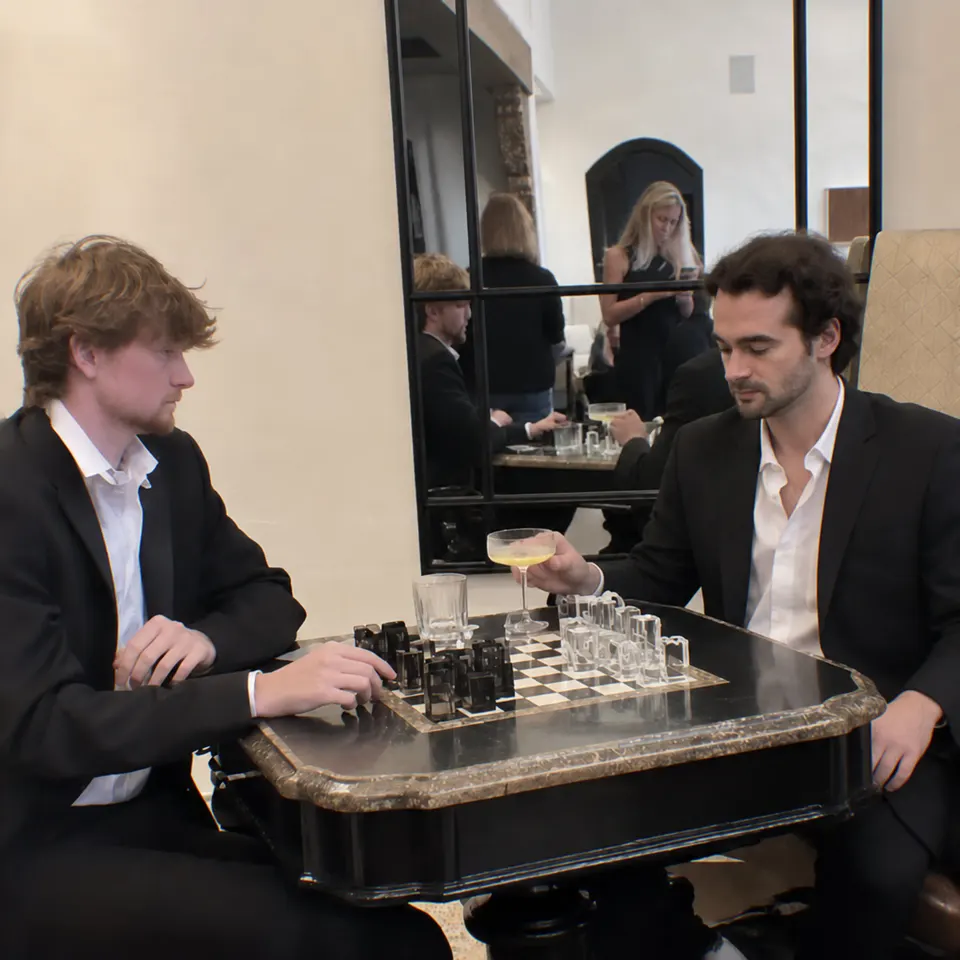
A table with something happening beats a wall you only pose against
Chris's chess scene gives the table a purpose. The board, the other player and their positions tell you what the moment is about. The room surrounds an interaction instead of asking a nice interior to carry the whole picture.
You can use that principle at home, in a cafe or at a gathering. Choose a place where you can sit comfortably and keep the shared activity visible. A board game, a sketchbook or food you're preparing gives your hands a job and the picture a subject beyond your appearance.
Pick something you enjoy enough to keep doing after the photos stop. If you don't play chess, borrowing a board just to copy the composition gives you an interest to explain that isn't yours. Use your own activity; the hobby-photo guide helps you show your part in it.
Use a nearby outdoor place for a plan you'd actually make

Chris's waterside photo has more to offer than a lake view. The paddles and companion explain the outing. The shore gives them enough room to stand together while leaving the activity visible.
For your own outdoor options, start close to what you already do. A court after a game, a path on your regular walk or a park where you meet friends can all give you a usable setting. You don't need a distant mountain to justify an outdoor photo.
Choose a comfortable stopping point with space for the person taking the photo. If they're squeezed against a railing or you're blocking a busy path, the location will be awkward even if the view is attractive. Move to a wider part of the area and keep the detail that explains the plan.
Check the background for useful information. A paddle, a dog or people you came with may be worth keeping. An empty stretch of pavement usually adds less. The cropping guide can help afterward, but choosing a better position while you're there gives you more options.
Test the spot before settling into it
Take one quick frame and look at it on the phone. Can you read the expression, the activity and the people who matter? If the answer is no, change your position before changing the entire plan.
Indoors, try a seat where the light reaches you rather than putting a bright window directly behind your head. Outdoors, a nearby patch of even shade can make a relaxed expression easier than staring toward harsh sunlight. Keep the activity in the frame while you adjust; our lighting guide covers those choices.
Choose a plan, then a place
- Start with a plan
Pick something you enjoy doing or people you enjoy seeing.
- Find a usable spot
Leave room for the activity and a comfortable camera position.
- Keep what explains it
Include the people, objects and setting that make the moment yours.
A quick test frame tells you whether to stay, move a little or try another moment.
For a dressed-up photo, use an occasion with people in it

MJ's dinner photo makes the outfit feel at home. The table, guests and smile give it a social setting. It suggests an evening someone could enjoy being part of, without making the room's decor the main attraction.
Look for a similar opening at a dinner, celebration or other occasion you already want to attend. Ask for a few pictures during a pause, while the people and table still explain the moment. You don't need to book an expensive venue solely to get a dating photo.
Choose a seat or standing position that lets the photographer include what matters without interrupting the meal. Keep the company when it's part of the appeal. For choosing between a table photo and a more distant view of the room, see the restaurant-photo guide.
Home works when the picture has a reason to be there
A home photo can show a quieter side: cooking, playing with a pet, making something or sharing a game. Clear the unrelated things that pull attention away, then keep the details that explain your activity. A mixing bowl belongs in a cooking picture; a pile of packaging beside it probably doesn't help. The indoor photo guide shows how to arrange the activity, camera position and available light.
Don't strip the room until it could be anywhere. The useful background connects the activity to you. If the only idea is standing against a blank wall, ask what that picture adds beside the portraits you already have.
Plan a small outing instead of a tour of backdrops
Pick the missing side of your profile before choosing a location. If you have plenty of solo outdoor photos, a meal or game with someone may add more than another park. If all your pictures are formal events, a casual activity can show a different kind of day.
One plan with a natural pause is enough to start. Use the photoshoot planning guide to turn that idea into a short list of moments and a backup. A walk followed by coffee can offer different moments without changing clothes or spending the day hunting for walls. Ask a friend for a specific frame, then get back to the outing. The guide to asking a friend has wording you can use.
Before you leave, check that you have a usable option. You don't need a perfect set from one location. You need a picture that adds something worth seeing to the profile you're building.